Updated November 5, 2026 · Practical foldable camp table buying guide for car campers (research-based; not a personal gear diary)
As an Amazon Associate I earn from qualifying purchases.
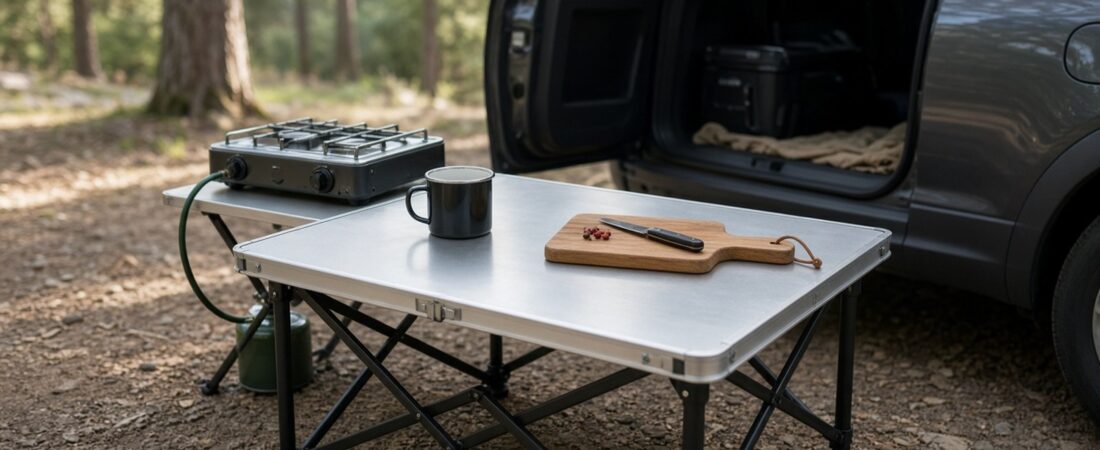
A picnic table at a campground is often sticky, uneven, or already claimed. A dedicated foldable surface keeps cookware, cutting boards, and coffee gear off the dirt and gives your stove a stable neighbor when the site table is wrong for cooking. This guide compares aluminum roll-top, suitcase-style, bamboo, height-adjustable, and compact side tables so you can pick best foldable camp tables for car camping that fit a trunk—not a backpacking gram chart.
Disclosure: Some links on this page may be affiliate links. If you buy through them, we may earn a commission at no extra cost to you. See our Affiliate Disclosure.
Quick Pick: Which Foldable Camp Table Fits Your Weekend?
Solo or couple, compact trunk: suitcase-style folding table or a short aluminum roll-top that packs into a slim cylinder.
Family or group cookouts: longer aluminum roll-top or a wider suitcase table with room for stove neighbor + prep space.
Looks matter at the campsite: bamboo or wood-top folding tables for serving and dining; keep high-heat cooking on a heat-safe aluminum surface or keep the stove on its own stand.
If you do not own a heat source yet, prioritize a reliable two-burner before upgrading furniture. See Best Two-Burner Camp Stoves Under $150 and the broader Camp Kitchen Essentials Checklist.
Why a Dedicated Camp Table Matters
Campground picnic tables are built for sitting and plates—not for a hot propane stove, a cast-iron skillet, and a cutting board fighting for the same sticky boards. Tops can be warped, bird-soiled, or shared with neighbors. Putting a suitcase stove on an uneven picnic top is a tip risk; putting prep food next to a public table edge is a hygiene hassle.
A foldable camp table gives you a known height, a known footprint, and a surface you can wipe and pack. Car campers have trunk volume, so “foldable and durable” beats “ultralight and tiny.” Treat the table as kitchen infrastructure—same tier as stove, cookware, and wash kit—not as optional décor.
Types of Foldable Camp Tables
Aluminum roll-top tables
Roll-top (or “roll-up”) designs use linked aluminum slats that coil into a cylinder, with folding legs that often store inside or clip on. They are popular for car camping because packed length is short and setup is usually fast once you know the latch pattern. The top sheds crumbs easily and handles outdoor weather better than raw wood.
Pros: packs small relative to open size, easy wipe-down, widely available sizes. Cons: slats can pinch fingers during roll-up; very thin tops still need care around direct heat; wind can catch a tall, light table if legs are not locked.
Suitcase-style folding tables
These fold into a flat rectangular “suitcase” with a carry handle. Legs fold out; the top is often hard plastic, laminate, or aluminum composite. They feel familiar if you already use a suitcase camp stove—same pack shape, stack-friendly in a hatchback.
Pros: protective closed shell for travel, intuitive fold, good as a secondary prep table. Cons: packed profile can be bulkier than a roll-top cylinder; plastic tops vary widely in heat tolerance—never assume a thin plastic surface is stove-safe.
Bamboo and wood-top folding tables
Bamboo tops look warmer for dining and serving. Many fold with aluminum or steel frames. They photograph well and feel nicer under plates than cold metal—but treat them as dining/prep furniture first. Hot cast iron, open flames, or a roaring two-burner can scorch or dry wood finishes. Use a heat-safe pad, keep the stove on a separate aluminum table or freestanding frame, or cook with the stove on its own legs on level ground.
Height-adjustable camping tables
Telescoping or multi-position legs help when one person sits in a camp chair and another stands to chop vegetables. Adjustable height also helps on mild slopes if you can level each leg. Expect a small weight and complexity trade-off versus a fixed-height roll-top.
Compact side tables and modular overlanding setups
Small side tables hold a lantern, spice kit, or coffee cone beside the main kitchen. Overlanding-style modular systems (table tops that clamp to vehicle racks or stack with boxes) make sense if you already build a vehicle kitchen—overkill for a first car-camping weekend. Start with one solid main table; add a compact side table only when the main surface is always crowded.
What to Check Before You Buy
- Packed size: Measure your trunk or kitchen bin. A roll-top cylinder and a flat suitcase pack differently even at similar open area.
- Setup speed: Practice once at home. Latch confusion at dusk wastes dinner time.
- Weight capacity (general): Look for a stated load rating that covers cookware, a full cooler corner, or leaning elbows—not just empty plates. Treat marketing numbers as ceilings, not invitations to stand on the table.
- Top material vs heat: Never put a hot stove on thin plastic. Prefer aluminum or a maker-stated heat-safe surface for stove neighbor duty, or keep the stove freestanding / on the ground stand while the table holds prep only.
- Wind and stability: Wide stance and locked braces matter more than looks. On soft ground, use levelers or find firmer pads under feet.
- Uneven ground: Adjustable legs help; otherwise shift the table to the flattest patch near your kitchen zone.
Comparison Table
| Type | Packed size feel | Best for | Heat caution | Cleanup |
|---|---|---|---|---|
| Aluminum roll-top | Slim cylinder | Main kitchen surface, couples–families | Better for stove-adjacent use than thin plastic; still avoid extreme direct flame abuse | Wipe slats; watch finger pinch when rolling |
| Suitcase folding | Flat rectangle | Prep table, easy carry handle | Verify top material—many plastics are not stove-safe | Wipe hard top; store dry |
| Bamboo / wood top | Varies (often suitcase-like) | Dining, serving, photo-friendly camps | Keep hot stoves and cast iron off untreated wood; use pad or separate stove stand | Wipe; avoid soaking |
| Height-adjustable | Similar to base style + hardware | Mixed sit/stand cooking, mild slopes | Same as top material | Same as top; check leg locks for grit |
| Compact side table | Very small | Lantern, coffee, overflow gear | Not a stove platform | Quick wipe |
How a Table Fits Your Camp Kitchen
Think in zones: heat (stove or grill), prep (knife and board), and wash (basin). Your foldable table usually owns prep and plating; freestanding stoves may sit beside it. Suitcase two-burners that need a tabletop must share a heat-tolerant surface—or you accept using the picnic table only for the stove while your foldable holds food.
Pair the table with gear you already plan to buy: a two-burner under $150, a practical camping cookware set, and heavier pieces from a cast iron camp cooking setup only if the table rating and top material can handle the weight and heat pattern you use. Coffee gear from a morning kit also needs a flat spot—see camp coffee setups for car camping. For the buy-order mindset, return to the essentials checklist.
FAQ
Can I put my propane camp stove on a foldable table?
Only if the top is clearly heat-tolerant and stable, and the stove footprint fits with margin. Many thin plastic suitcase tops are for prep and dining only. When unsure, run the stove on its own legs on level ground or on a freestanding frame, and reserve the foldable table for prep.
Roll-top or suitcase—which packs better for a sedan?
Roll-tops often win on awkward trunk corners because they are cylindrical. Suitcase tables stack neatly against a cooler. Measure your cargo shape; either style works for car camping if open size matches your cook crew.
Do I need a bamboo table?
No. Bamboo is a comfort and aesthetics upgrade for dining. Aluminum is the more forgiving default for a first kitchen table that may sit near heat and wet gear.
How big should the table be for two people?
Enough for a cutting board, two plates, and either stove clearance or a clear “hot zone” beside the table. Couples often do fine with a mid-size roll-top; add a tiny side table if coffee and spices always invade prep space.
Will wind tip a light camp table?
It can—especially with a tall profile and empty top. Lock every brace, seat feet on firm ground, and avoid using the tabletop as a sail next to a ridgeline gust. Weight the surface with cookware only when the stove setup is safe and supervised.
Bottom Line
For most car campers, one solid aluminum roll-top or a well-reviewed suitcase folding table covers weekday-to-weekend cooking without filling the trunk. Choose bamboo when dining vibe matters and you will keep high heat elsewhere. Add height adjustment or a compact side table only after the main surface is always maxed out.
Buy the table after (or with) a trustworthy stove and basic cookware, wipe it before pack-up, and treat heat ratings as real limits—not suggestions. A stable foldable top turns a muddy picnic site into a workable kitchen faster than another single-use gadget.
This guide is a research-based framework for foldable camp tables used in car camping. Product specs, load ratings, and materials vary by model—verify manufacturer guidance before placing hot stoves or heavy cast iron on any tabletop.
Browse more guides
Related camp kitchen and outdoor cooking notes: